



Welcome to our journey into Mapo Tofu, a favourite in Sichuan cuisine. It’s known for its bold flavours that excite your taste buds. This dish combines soft tofu, spicy ground pork, and Sichuan peppercorns for a unique taste.
This recipe comes from Sichuan province in China. It’s a mix of heat, texture, and flavour. We’ll show you how to make real Mapo Tofu, just like in traditional Chinese cooking.
We’re about to dive into a culinary masterpiece that shows off Sichuan cuisine—Mapo Tofu. This dish is more than just food; it’s a rich tradition that mixes “ma” and “la” flavours.
Mapo Tofu is a vibrant Sichuan dish that excites your taste buds. It combines soft tofu, spicy sauce, and aromatic seasonings. It’s a perfect mix of “ma” and “la” flavours.
Our journey goes back to the late 19th century in Chengdu, Sichuan province. A woman with a pockmarked face created this dish in a small restaurant. She mixed simple ingredients like tofu, minced meat, and spicy bean paste.
A testament to the democratic nature of great cooking: simple ingredients elevated through technique and passion.
Her dish was loved by labourers and travellers. It quickly moved from street markets to restaurants across China and the world.
What started as street food is now a global culinary icon. It shows the power of traditional cooking and regional flavours.
To make real Mapo Tofu, we need to pick the right ingredients. These ingredients bring the Sichuan taste to life. Our journey starts with choosing top-quality parts to make this dish special.
Creating the best Mapo Tofu needs careful picking of ingredients. Let’s look at the key parts that make this dish stand out.

To make our Mapo Tofu even better, we suggest adding these optional ingredients:
These optional ingredients let us make the dish our own. They add a special touch while keeping the true Sichuan taste of Mapo Tofu.
Making real Mapo Tofu needs care and knowing how to cook like the Sichuan way. Our guide will turn your kitchen into a place full of flavour.
Getting your ingredients ready is key before cooking. Here’s what to do:
Our traditional way makes sure your dish tastes just right:

The last steps are simmering and seasoning. Add stock, gently add tofu cubes, and season with soy sauce. Cover and simmer for five minutes, letting the flavours mix well.
| Cooking Stage | Key Actions | Timing |
|---|---|---|
| Initial Preparation | Ingredient Mise en Place | 10 minutes |
| Aromatic Base | Stir-frying Garlic, Ginger | 30 seconds |
| Meat Cooking | Browning Minced Pork | 3-5 minutes |
| Sauce Development | Adding Doubanjiang, Stock | 2-3 minutes |
| Final Simmering | Integrating Tofu, Seasoning | 5 minutes |
To finish, add a cornstarch slurry to thicken the sauce. Then, add sesame oil, Sichuan pepper powder, and fresh spring onion greens. This whole process takes about 15-20 minutes, making a Mapo Tofu that tastes like it’s from a restaurant.
Mapo tofu is very flexible in the kitchen. Chefs and home cooks can try many ingredients and diets. This Sichuan dish has many variations for different tastes and health needs.
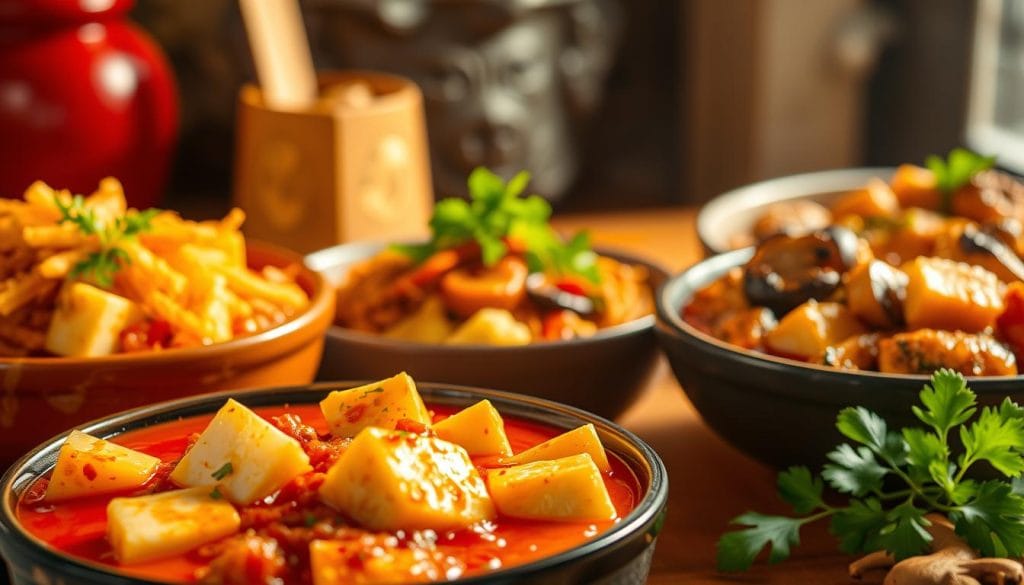
The traditional recipe can be changed in many ways. It can be made for those who prefer plant-based or different proteins. Mapo tofu can be made to fit your taste.
For those who love plant-based food, Mapo tofu can be easily changed:
Meat lovers can try different proteins that go well with Sichuan flavours:
| Meat Option | Flavour Profile | Recommended Preparation |
|---|---|---|
| Beef | Rich, robust | Finely minced |
| Chicken | Light, lean | Diced small |
| Lamb | Intense, earthy | Ground texture |
“Culinary creativity knows no boundaries with Mapo tofu!” – Sichuan Cooking Experts
Our journey shows Mapo tofu’s flexibility. It’s great for many diets and tastes.
Learning to balance the spiciness in Mapo Tofu is an art. It turns a simple dish into a thrilling experience. Our guide will show you how to adjust the spice while keeping the dish true to its roots.
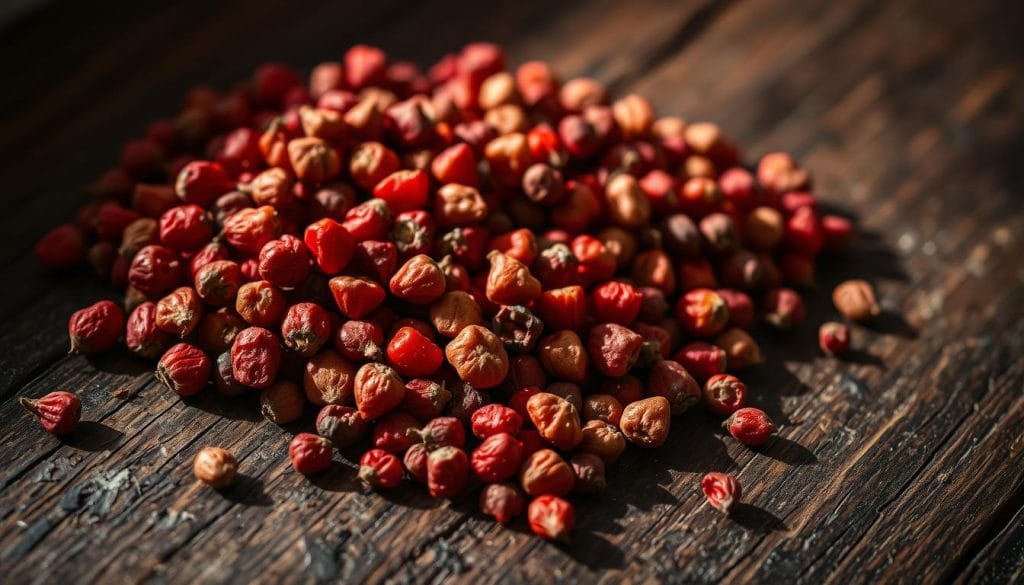
Sichuan peppercorns are key to the dish’s unique taste. They give a tingling, numbing feel. This lets you enjoy spicy food without it being too hot.
Getting the right spice in Mapo Tofu is all about understanding heat. The doubanjiang and chilli products control the spice level. This gives you full control over how spicy it is.
Pro tip: A bit of sugar can balance out too much heat. It makes the flavours work together better. Start with a small amount and adjust to your liking.
Creating the perfect meal around Mapo Tofu needs careful thought. We aim to balance the spicy flavours with cooling and textural contrasts.
Here are some side dishes that make Mapo Tofu even better:
Rice is a great base for Mapo Tofu. It’s neutral and slightly sweet. We make one cup of dry rice for four people. The rice should be fluffy and slightly sticky.
Try serving Mapo Tofu with thick, chewy udon noodles for a twist. This mix of Japanese and Chinese tastes is a hit. It’s chewy and absorbs the sauce well.
| Accompaniment | Flavour Profile | Recommended Quantity |
|---|---|---|
| Jasmine Rice | Neutral, slightly sweet | 1 cup dry (3 cups cooked) |
| Udon Noodles | Chewy, robust | 200-250g |
| Cucumber Salad | Refreshing, tangy | 1 medium cucumber |
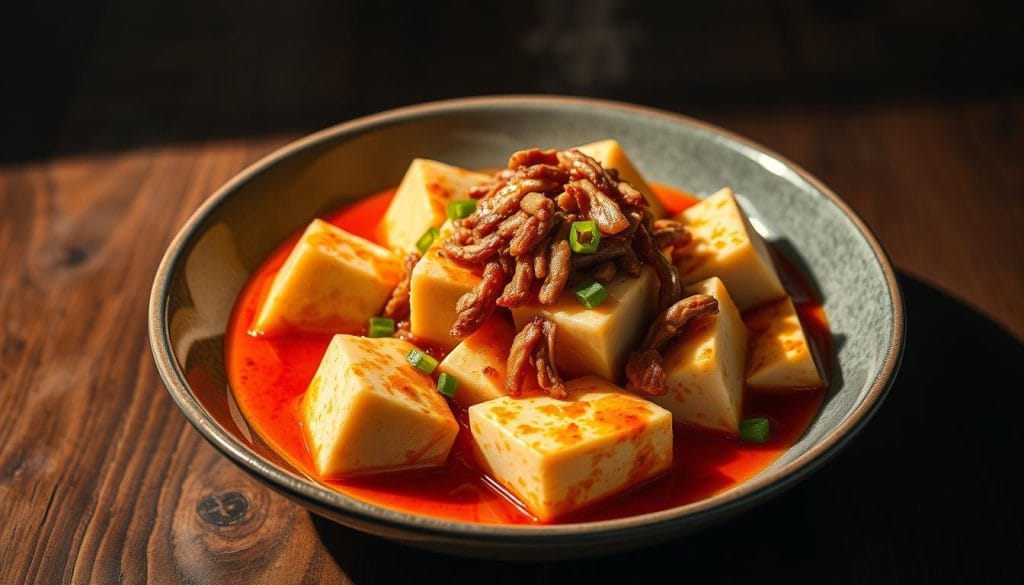
Here are some drinks that go well with Mapo Tofu:
The key is balance. Mapo Tofu is intense and spicy. So, choose dishes that are mild and light. This follows the yin-yang philosophy of Chinese cuisine.
Our gourmet Mapo Tofu is a tasty mix of flavours and nutrients. A typical serving (about 250-300g) has a rich nutritional profile. It’s more than just food.
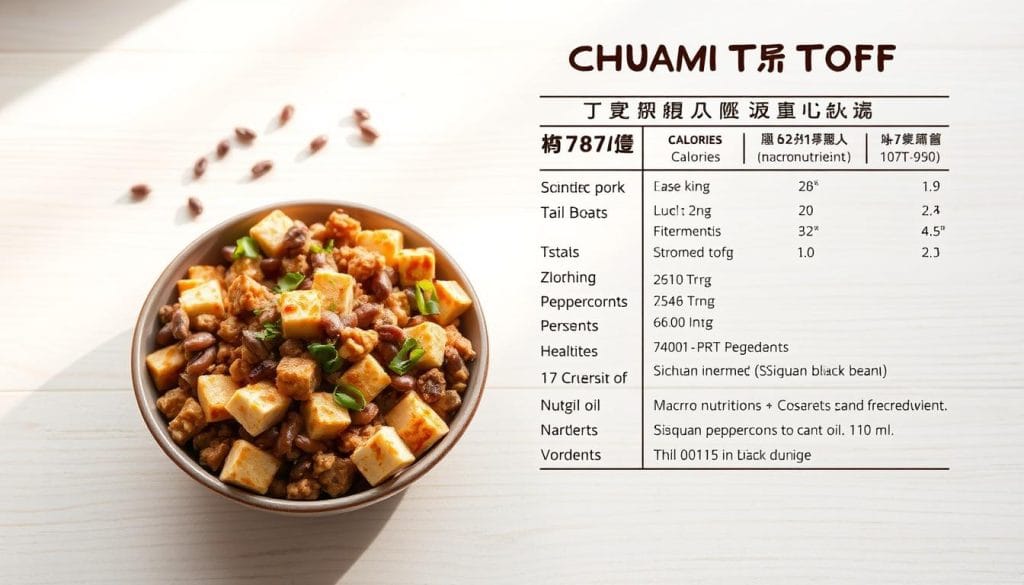
Tofu is a key part of our Mapo Tofu recipe. It’s a plant-based protein that offers many health benefits. Each serving has 12-15g of protein, from both tofu and lean pork.
Our Mapo Tofu is a balanced meal option. It has 220-250 calories per serving. The macronutrients include 15-18g of fat and 8-10g of carbs.
| Nutrient | Amount per Serving |
|---|---|
| Calories | 220-250 |
| Protein | 12-15g |
| Fat | 15-18g |
| Carbohydrates | 8-10g |
The dish also has extra health benefits. Capsaicin from chillies boosts metabolism. Garlic and ginger add anti-inflammatory compounds. Sodium is 400-600mg per serving, so watch your salt intake.
To make it lighter, reduce oil by half. Use extra-lean mince or mushrooms, and add more tofu. This way, it stays tasty but is healthier.
Making great Mapo Tofu needs skill, technique, and knowing the cooking basics. Our guide will show you how to avoid common mistakes. This will make your dish go from good to amazing.
Choosing the right tofu is key for the perfect Mapo Tofu texture. Many struggle with tofu that’s too firm or too soft. This can ruin the dish’s smooth feel.
We suggest using medium-firm silken tofu. It’s soft enough to be luxurious but keeps its shape well.
Using the right technique makes a simple recipe into a work of art. Not toasting Sichuan peppercorns right can make the flavour dull. Toasting them briefly in a dry pan brings out their unique citrus and floral notes.
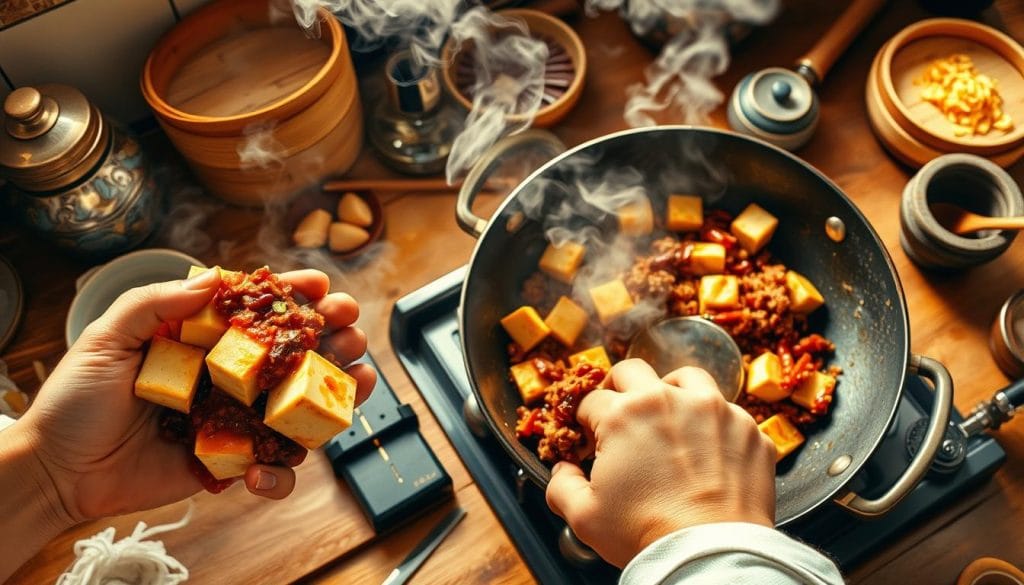
Don’t add aromatics to oil that’s not hot enough. This can make the dish steam instead of fry. Also, avoid overcrowding the pan and boiling the tofu. Our expert tips will give you a dish with rich, complex flavours that will impress.
The secret to perfect Mapo Tofu lies in understanding the nuanced techniques that transform simple ingredients into a spectacular dish.
Choosing the right drink for our spicy Mapo Tofu is key. This Sichuan dish has bold flavours and heat. We need drinks that match or cool it down.
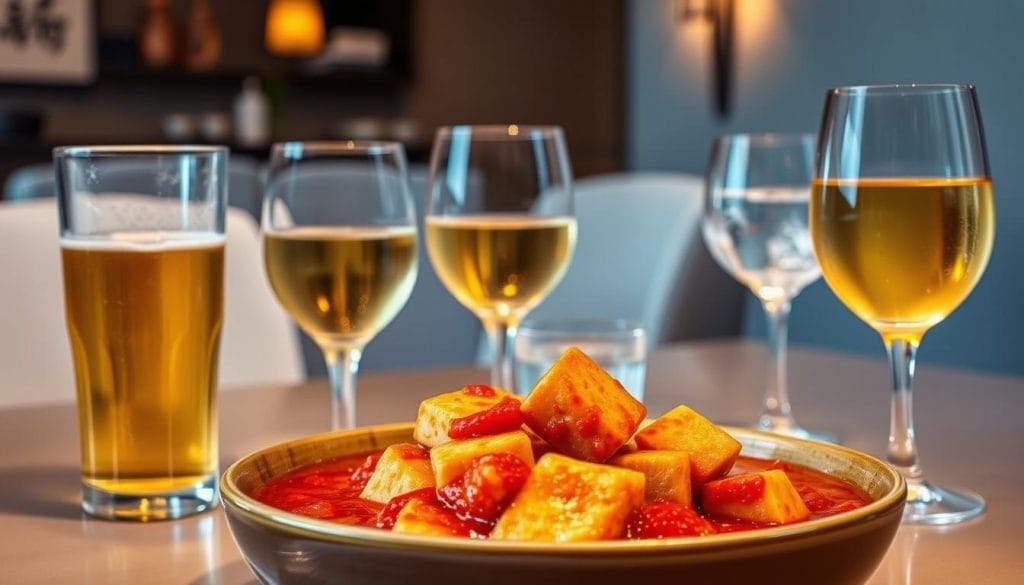
When picking drinks, we aim to balance the dish’s strong taste. We want drinks that make the meal better.
In Sichuan, traditional drinks help balance the dish’s heat and taste. Here are our top picks:
New trends bring exciting drink choices for Mapo Tofu:
| Drink Category | Specific Recommendation | Flavour Interaction |
|---|---|---|
| White Wine | Riesling | Sweetness counteracts spice |
| Craft Beer | Wheat Beer | Refreshing contrast |
| Cocktails | Gin-based drinks | Herbal notes complement spices |
Our drink choices aim to make the Mapo Tofu meal better. They offer refreshment and match the dish’s complex flavours.
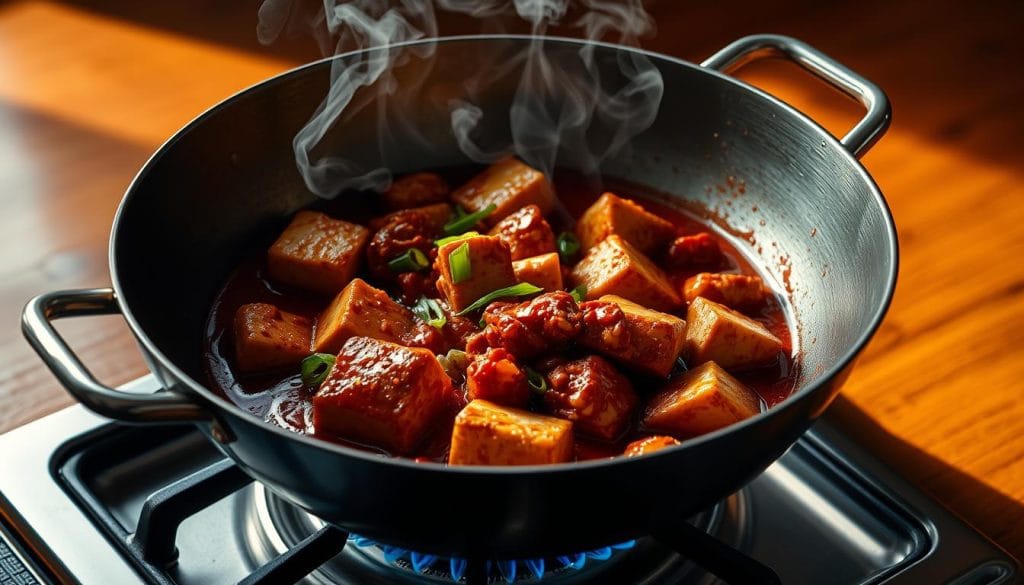
Keeping Mapo Tofu’s tasty flavours requires careful storage and reheating. Leftovers can be tricky, but the right methods can make your Sichuan dish just as good the next day.
Storing Mapo Tofu needs precision. Use airtight containers to keep it fresh. Keep the tofu and rice apart to avoid sogginess. Cool the dish down before sealing it in the fridge.
When reheating Mapo Tofu, use gentle heat. Put it in a pan or wok over medium-low heat. Add a splash of water or stock (2-3 tablespoons) to loosen the sauce. Heat it gently, stirring now and then, for 5-7 minutes.
Microwave reheating is quick but needs care. Use a microwave-safe dish, cover it loosely, and heat in 1-minute intervals at 70% power. Stir gently between intervals to heat evenly. For best results, allow the food to sit for a minute after heating, as this helps to distribute the heat throughout. If you’re unsure about how to optimize your microwave reheating process, consider checking the home redirect techniques explained in various cooking resources. These tips can enhance your efficiency and ensure your meals taste just as good as when they were first prepared.
Our top tip: Store tofu mixture and rice separately if you’ll eat leftovers over several days. Only mix them when you’re ready to eat, to keep the rice from getting mushy.
Our journey with Mapo Tofu has shown us the beauty of Sichuan cuisine. We’ve seen how dishes like Kung Pao chicken and Dan Dan noodles blend tradition with new ideas. These flavours encourage us to try new things in the kitchen.
Twice-cooked pork and Hot and Sour soup show the depth of Sichuan cooking. Learning about spices like doubanjiang and Sichuan peppercorns is essential. It’s not just about following recipes; it’s about connecting through food.
Mapo Tofu is more than a meal; it’s a bridge between cultures. It connects kitchens from Chengdu to Dublin. By making this dish, we join a global food conversation.
We encourage you to try, adapt, and enjoy making Mapo Tofu. We hope your dish opens a door to the amazing world of Sichuan cuisine.
Mapo Tofu is special because it mixes silken tofu, spicy Doubanjiang, and Szechuan peppercorns. This mix gives a unique taste that’s both spicy and numbing. It’s a key part of Sichuan cuisine.
Yes, Mapo Tofu is spicy. But, you can make it less spicy if you like. The spiciness comes from Doubanjiang and Szechuan peppercorns. You can adjust these to your taste.
Absolutely! We can make it vegetarian by using tofu or mushrooms instead of meat. The sauce and spices are vegetarian-friendly, so it’s perfect for vegetarians.
Silken tofu is the best for Mapo Tofu. It’s soft and absorbs the sauce well. This makes the dish creamy and delicious.
It takes about 20-30 minutes to make. You’ll chop ingredients and make the sauce. Then, it’s a quick stir-fry. It’s a fast and tasty meal.
Doubanjiang, Szechuan peppercorns, and garlic are key. They give the dish its unique spicy and numbing taste. These spices are what make Sichuan Mapo Tofu special.
Store it in an airtight container in the fridge for 3-4 days. Reheat it gently to keep the tofu intact. Add a bit of water to keep the sauce right.
Steamed rice is a classic choice. It helps cool down the spiciness. You can also try stir-fried veggies or a cucumber salad. They add a nice contrast to the Mapo Tofu’s bold flavours.
 CART
0
CART
0
Leave a Reply