



We invite you on a culinary journey through Greece’s vibrant streets. Here, we explore the world of gyros, a favourite among food lovers in Ireland and worldwide. These flavourful wraps come from traditional Greek cuisine.
We’ll show you how to make authentic gyros. You’ll learn about the mix of juicy meats, aromatic spices, and fresh ingredients. We’ll guide you through choosing the best cuts of beef and lamb and making the perfect marinade. This way, you can make restaurant-quality gyros at home.
Gyros are a beloved dish that has won hearts around the world. We dive into its rich history and why it’s so tasty.

Greek cuisine has given us many tasty dishes, and gyros are a standout. These flavourful wraps have become a hit globally.
Gyros have ancient Greek roots. Let’s uncover the story behind this tasty treat:
Greek street vendors created a special way to cook meat. This method makes gyros taste amazing.
Gyros have grown in popularity, showing off their versatility:
Each version is a delicious proof of gyros’ adaptability and appeal.
Gyros are more than food; they connect people through taste and tradition.
Making a great gyros needs the right ingredients. We pick top-notch meats, spices, and veggies. This mix creates a unique and tasty Greek street food experience.
Our gyros start with the best meat. We mix ½ pound ground lamb and ½ lb ground beef. This mix gives great taste and texture.
Our spice blend makes the meat special. We add:
| Spice | Quantity |
|---|---|
| Minced garlic | 2 tablespoons |
| Marjoram | 2 teaspoons |
| Rosemary | 2 teaspoons |
| Oregano | 2 teaspoons |
| Kosher salt | To taste |
| Black pepper | 2 teaspoons |
We also add toasted fennel seed, lemon zest, and dried chilli pepper. They add a nice touch.
We choose fresh, tasty veggies to go with our meat:
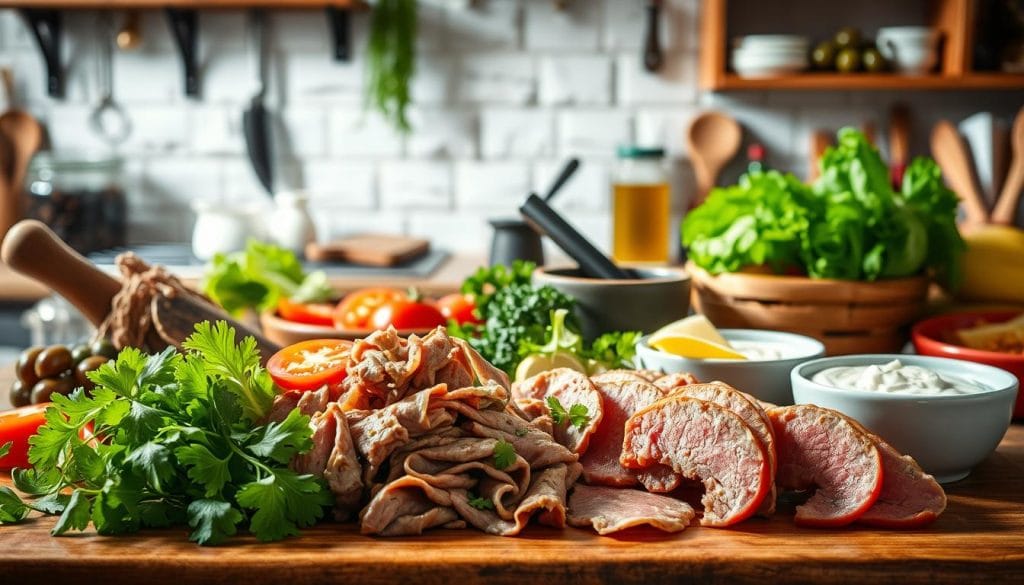
Our ingredients make sure you feel like you’re in Greece. Enjoy the authentic taste of our gyros.
Making the perfect gyros marinade is an art. It turns simple ingredients into a delicious experience. The right mix of spices, liquids, and techniques makes our meat preparation special.
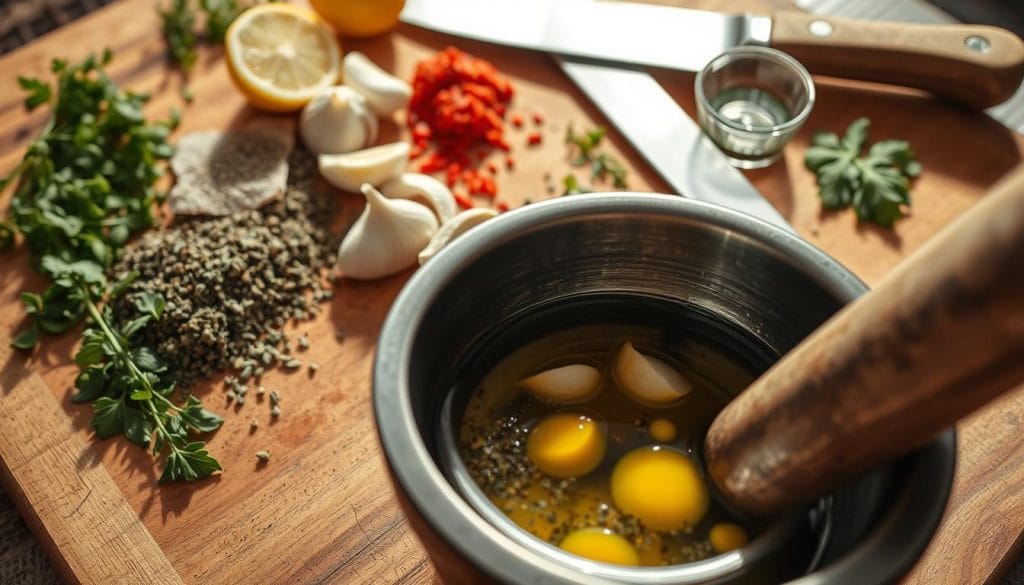
The breadcrumbs help hold our gyros mixture together. We choose a beer that adds a subtle malty flavour. This liquid makes each bite juicy and rich.
Choosing the right beer is key. An IPA brings out the herbs, while a brown ale adds sweetness. We mix ingredients carefully:
Understanding time is vital for flavour. We refrigerate the mix for at least four hours. But, an overnight rest is even better.
| Resting Period | Flavour Development Process |
|---|---|
| 4-6 hours | Initial protein breakdown |
| Overnight (8-12 hours) | Complete flavour integration |
| 24-48 hours | Maximum flavour complexity |
During rest, salt dissolves meat proteins, making it juicier. Flavours blend and the mix becomes firmer. This makes shaping easier.
This slow approach makes our gyros stand out. It ensures every bite is full of Mediterranean flavours.
Making authentic gyros needs skill and the right cooking methods. How you cook the meat affects its texture, taste, and quality. We’ll look at different ways to make gyros that are tender and have a crispy outside.
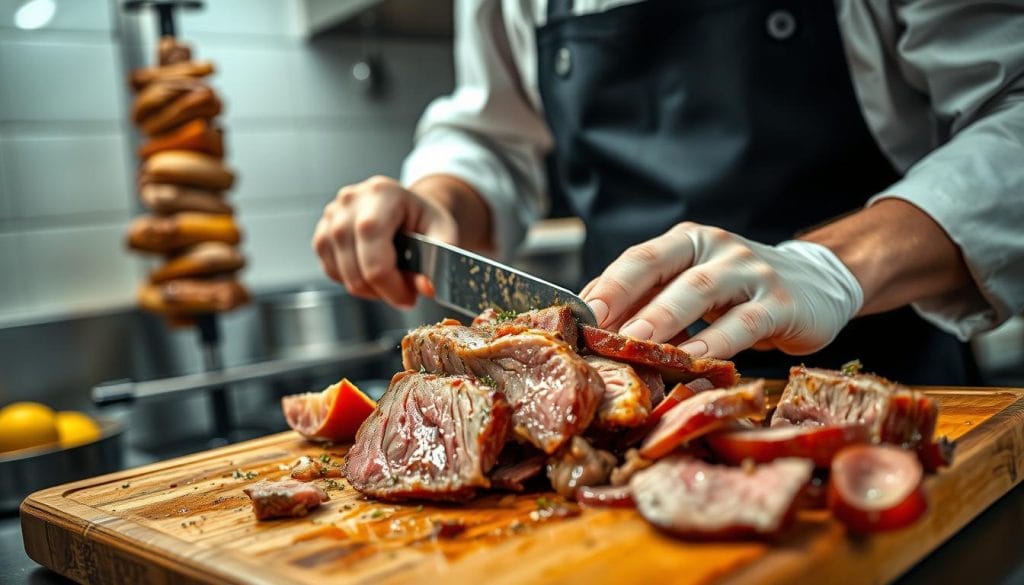
The vertical rotisserie is the top choice for making gyros. It lets the meat self-baste, making it taste rich and caramelised. Here’s how to use a rotisserie well:
If you don’t have a rotisserie, don’t worry. We’ve found ways to make gyros at home that are just as good:
Use a water bath in the oven at 325°F (163°C) for 60-75 minutes. This controls the meat’s internal temperature to 165-170°F (74-77°C).
Slow roast at 275-300°F (135-149°C) until the meat reaches 155°F (68°C). This makes the meat tender and full of flavour.
Sous vide at 150°F (66°C) for 1 hour gives you perfect temperature control.
After cooking, press the meat down with a heavy object while it cools. This makes it denser and easier to slice. Then, broil the slices for 2-4 minutes to get that crispy, caramelised edge.
| Cooking Method | Temperature | Cooking Time |
|---|---|---|
| Water Bath Oven | 325°F (163°C) | 60-75 minutes |
| Slow Roasting | 275-300°F (135-149°C) | Until 155°F (68°C) internal |
| Sous Vide | 150°F (66°C) | 1 hour |
Making a great gyros is like a work of art. We pick each ingredient with care. This turns simple parts into a tasty treat that feels like Greek street food.
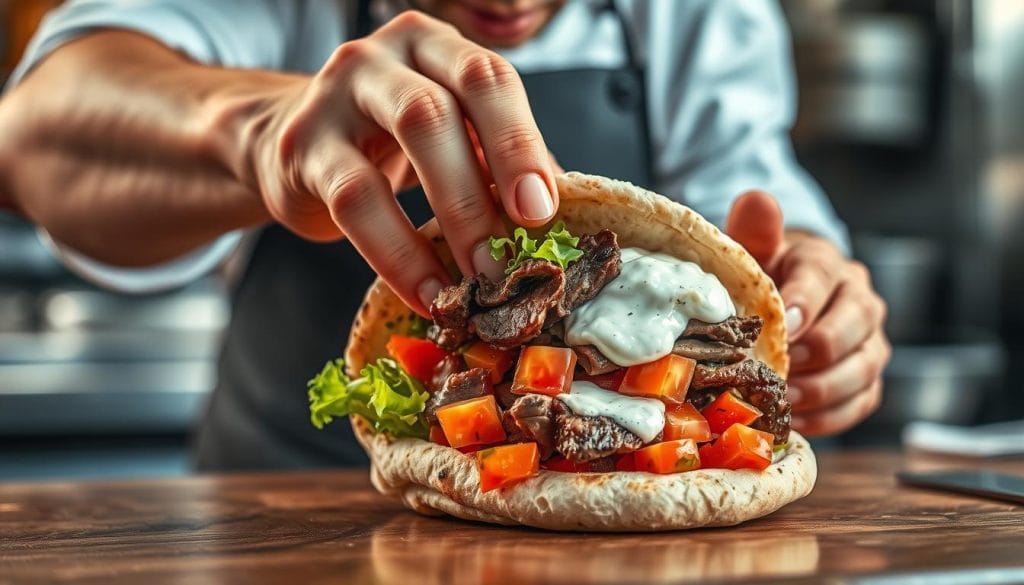
Our gyros start with top-notch pita bread. It does more than just hold things together. It adds flavour, keeps the bread dry, and sticks ingredients together.
We layer our gyros with care. We put broiled meat slices in the middle, making sure they’re crispy in some spots. This makes eating easier and more fun.
| Ingredient | Purpose | Placement Strategy |
|---|---|---|
| Meat | Primary protein | Centred, linear arrangement |
| Tomatoes | Acidity and moisture | Directly on sauce-covered bread |
| Vegetables | Textural complexity | Layered for balanced flavour |
We add onions for a sharp taste, tomatoes for juice, lettuce for crunch, and cucumber for coolness. We arrange them carefully to keep the meat crispy and the flavours rich.
Then, we fold the pita around our filling. We wrap it in foil. This keeps everything together and steams it slightly, blending flavours while keeping each part distinct.
Gyros are a true culinary masterpiece. They come alive with the right toppings. Our journey into traditional Greek street food shows how the right toppings can turn a simple meat wrap into a memorable meal.
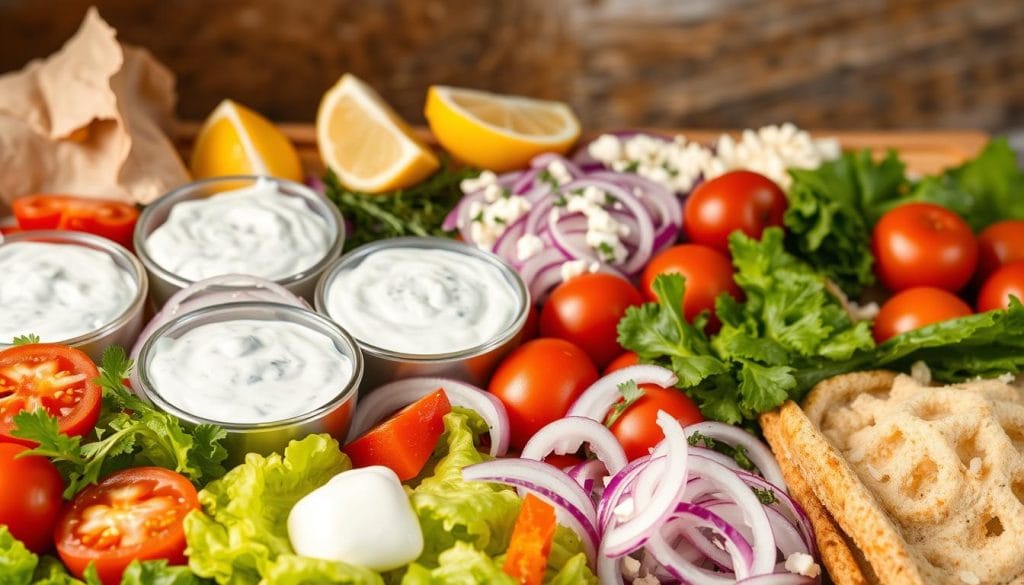
Our signature tzatziki sauce is a mix of ¾ cup strained yogurt, ¼ cup mayonnaise, 1 clove garlic, 2 teaspoons lemon juice, and 2 tablespoons chopped parsley. This creamy sauce adds a refreshing tang that matches the meat’s richness perfectly.
Pickled vegetables add a lively touch to our gyros. Crisp cucumber slices, red onions, and pickled peppers offer a zesty contrast to the meat.
“The secret to an exceptional gyros lies in its toppings” – Greek Street Food Maestro
Fresh herbs like mint or parsley make our gyros stand out. A sprinkle of chopped herbs adds a burst of freshness that balances the meat’s richness.
Turning a simple gyros meal into a gourmet feast is all about the right sides and drinks. It’s not just about the meat and pita. It’s about creating a full dining experience that excites all your senses.
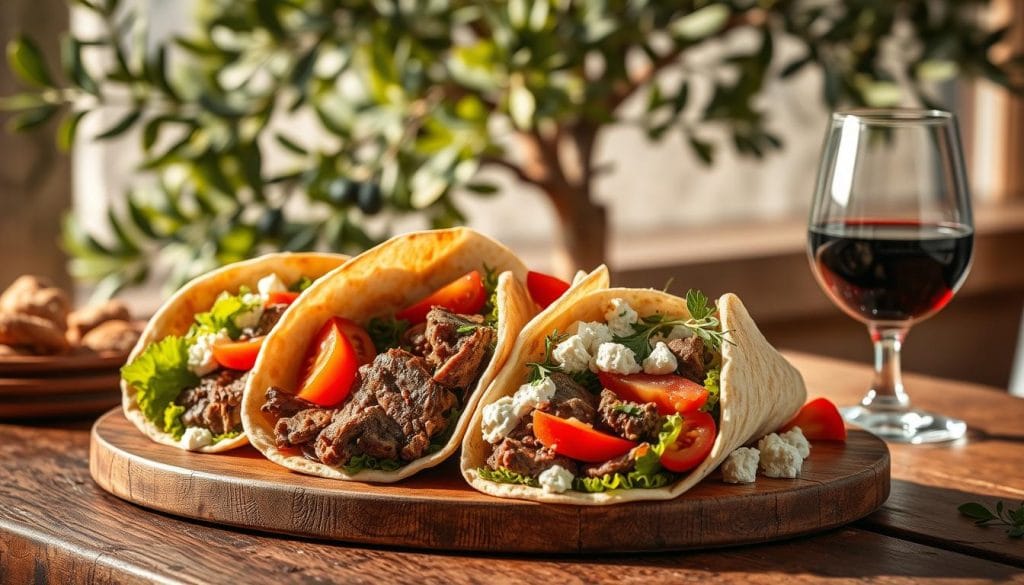
Pair your gyros with classic Greek sides for a better dining experience:
Greek wines pair perfectly with our gyros. A crisp Assyrtiko from Santorini has mineral acidity that balances the meat’s richness. A light-bodied Agiorgitiko offers red fruit flavours and soft tannins that match the spices.
For white wine fans, Moschofilero has floral aromas and refreshing acidity. It goes well with herbs and tzatziki. Rosé wines from Greece are versatile. Their fruit-forward taste and bright acidity pair well with both meat and vegetables.
Beer lovers can find great matches for our gyros. We suggest beers that complement or contrast the dish’s bold flavours:
These pairings turn a simple street food into a sophisticated meal. They invite diners to discover the rich tastes of Greek cuisine.
Greek street food has won the hearts of food lovers everywhere. Gyros, once a local treat, are now a global hit. They have crossed over from traditional to trendy.
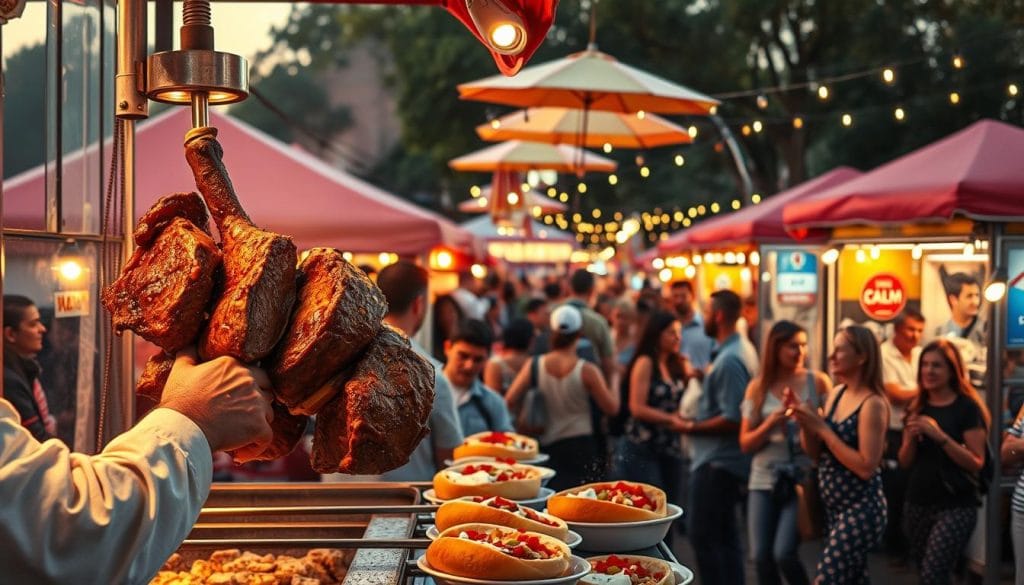
Street food festivals are key for gyros. They let people taste real Greek flavours. These lively events celebrate the cultural roots of our beloved gyros.
In Ireland and the UK, gyros shine at food festivals. These events show how versatile and delicious they are:
Instagram and TikTok have made gyros a visual delight. Food influencers create engaging content. They show off the skill in making these tasty wraps, attracting millions.
“Gyros are not just food; they’re a cultural experience shared across digital platforms” – Michelin-starred Chef Anna Thompson
Now, anyone can share their gyros recipes and cooking methods online. This has made food culture more open and accessible.
Making gyros at home is a fun cooking journey. Our guide will show you how to avoid common mistakes. You’ll learn to make gyros that taste like they’re from a restaurant. With the right techniques, you’ll achieve that perfect blend of spices and tender meat that makes gyros irresistible. Plus, just as using home redirect strategies for websites can enhance user experience, mastering these cooking tips will elevate your culinary skills to new heights. Impress your friends and family with your homemade gyros and savor the satisfaction of creating a restaurant-quality dish in your own kitchen.
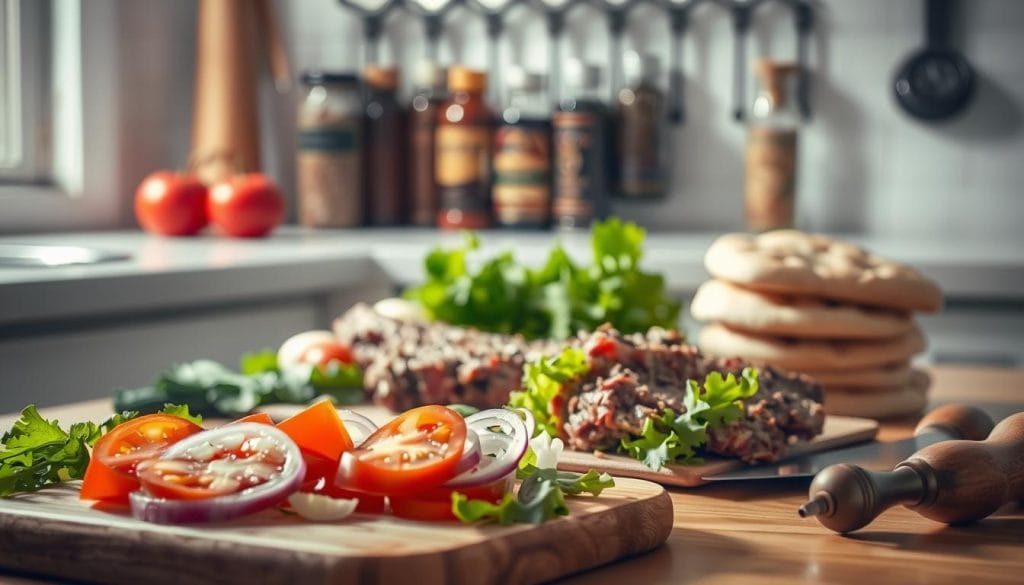
When making gyros, you need to be precise. We’ve found a few big mistakes people make:
Our tips will make making gyros faster without losing flavour:
Pro tip: Consistency is key when creating authentic gyros at home.
With a bit of practice and patience, you’ll make gyros that are as good as those in Greek street food places.
Our journey shows how to make authentic gyros. It’s about choosing the right ingredients and seasoning the meat right. We’ve learned how to cook it so it’s juicy and full of flavour. This turns a simple street food into a gourmet dish in your kitchen.
Homemade gyros are flexible and easy to make. You can make the meat loaves ahead of time and store them. This way, you can have quick, tasty meals with little effort. Our methods will improve your cooking and let you explore Mediterranean dishes.
Putting the sandwich together is key. Warm the pitta bread, spread tzatziki, and add crispy meat and fresh veggies. This makes a meal that’s not just good but also a sensory delight. We suggest trying different spices, meat mixes, and ways to serve it to make it your own.
Whether it’s for a family dinner or a big event, our tips will help you make a great meal. Enjoy making it, and relish every bite of your homemade gyros.
Gyros are a traditional Greek street food. They are made with meat cooked on a vertical rotisserie. This meat is served in pitta bread with fresh veggies and tzatziki sauce.
Unlike shawarma or doner kebabs, gyros are uniquely Greek. They are made with a mix of lamb and beef. This blend is seasoned with special Mediterranean spices.
For the best taste, use a mix of lamb and beef. The meat should be ground and seasoned with Greek spices like oregano, garlic, and rosemary. Then, shape it into a loaf for even cooking.
You can make gyros without a rotisserie. Use a standard oven, grill, or a heavy-bottomed skillet. The key is to cook the meat slowly and evenly. This keeps it juicy and full of flavour.
Tzatziki is a Greek sauce made from yoghurt, cucumber, garlic, olive oil, and fresh herbs. It’s easy to make at home. It adds a cool, tangy taste to gyros.
Traditional gyros are meat-based. But, we have vegetarian options like grilled halloumi or falafel. For gluten sensitivities, use gluten-free pitta bread or serve in a salad.
Cooked gyros meat can be stored in the fridge for 3-4 days. Reheat it gently to keep it moist. This prevents the meat from drying out.
Serve gyros with Greek salad, roasted veggies, hummus, and more tzatziki sauce. For a full Mediterranean experience, add olives, feta cheese, and a crisp white wine or refreshing beer.
Yes, gyros meat freezes well. Store it in airtight containers or freezer bags for up to three months. Thaw it in the fridge overnight and reheat gently to keep its texture and flavour.
 CART
0
CART
0
Leave a Reply