



Welcome to our guide on making authentic Louisiana jambalaya. This dish brings the lively food traditions of the American South to your home. It combines smoky andouille sausage, tender chicken, and a mix of Creole spices. These ingredients take you straight to Louisiana’s heart.
This Jambalaya has West African roots and is more than just food. It’s a cultural journey. We’ve made a recipe that keeps traditional cooking alive but is easy for home cooks in Ireland to follow. Our recipe turns simple ingredients into a one-pot wonder that will amaze you.
Jambalaya is at the heart of Louisiana’s cooking, a dish full of flavour. It tells the story of New Orleans through its taste. Our journey starts with this amazing dish, showing the essence of Creole cuisine.
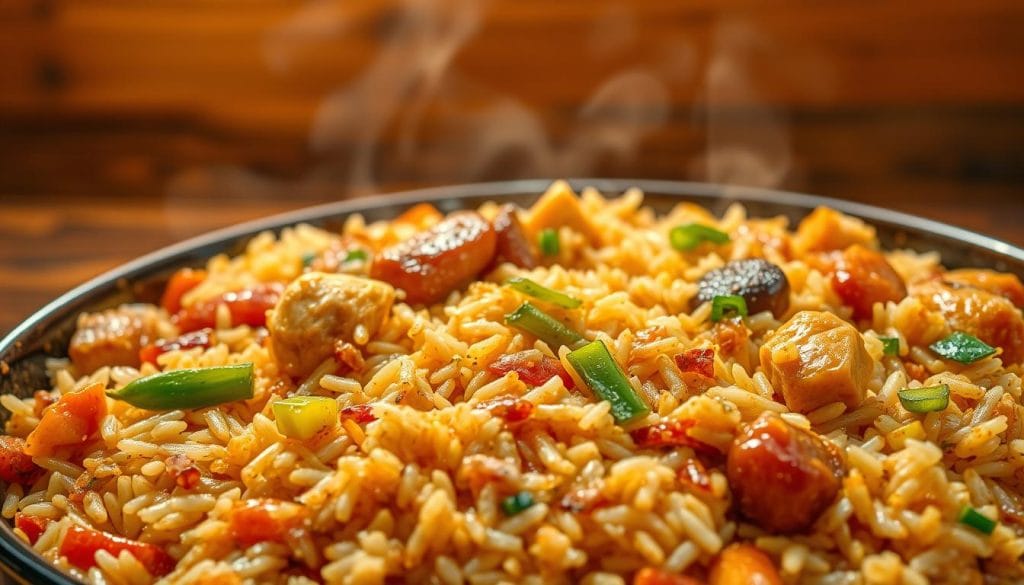
Jambalaya’s story is one of cultural mix and cooking creativity. This favourite dish comes from a mix of global tastes, showing Louisiana’s rich heritage.
Research shows jambalaya’s roots are deep and varied. Some say it was inspired by Spanish paella, but most believe it comes from West African jollof rice.
Jambalaya is more than food; it’s a story of Louisiana’s cultures. It mixes African, Caribbean, French, and Native American cooking styles.
| Jambalaya Style | Key Characteristics | Regional Origin |
|---|---|---|
| Creole Jambalaya | Tomato-based, red colour | New Orleans |
| Cajun Jambalaya | No tomatoes, brown colour | Rural Louisiana |
Jambalaya is special because of its cooking method. It’s made in one pot, with layers of flavour. This makes it different from other rice dishes.
“Jambalaya is not just food; it’s a celebration of Louisiana’s culinary soul.” – Chef Marie Dupont
Making a top-notch jambalaya needs the right Louisiana specialities and real ingredients. Our recipe turns a basic dish into a feast for the senses. It does this by using the best parts to boost the flavour.
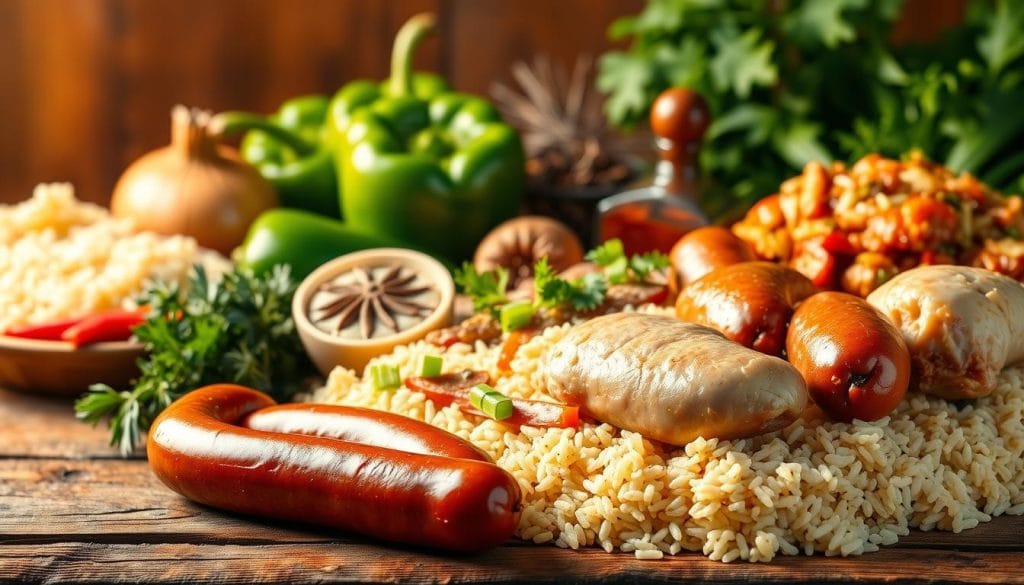
The secret to our jambalaya’s success is picking the tastiest, highest-quality ingredients. Each piece is key to creating the deep, complex taste that makes this Louisiana classic.
Andouille sausage is the heart of our jambalaya recipe. This special Creole sausage adds:
We suggest using boneless, skinless chicken thighs for the best results. These cuts have:
Our recipe uses the classic “holy trinity” of Cajun cooking: onions, celery, and green bell peppers. The spice mix includes:
By carefully picking each ingredient, we make sure our jambalaya tastes like a true Louisiana dish. It takes diners straight to the heart of Louisiana’s food culture.
In Cajun cooking, starting with a great flavour base is key. Our jambalaya recipe honours the rich traditions that turn simple ingredients into amazing meals.
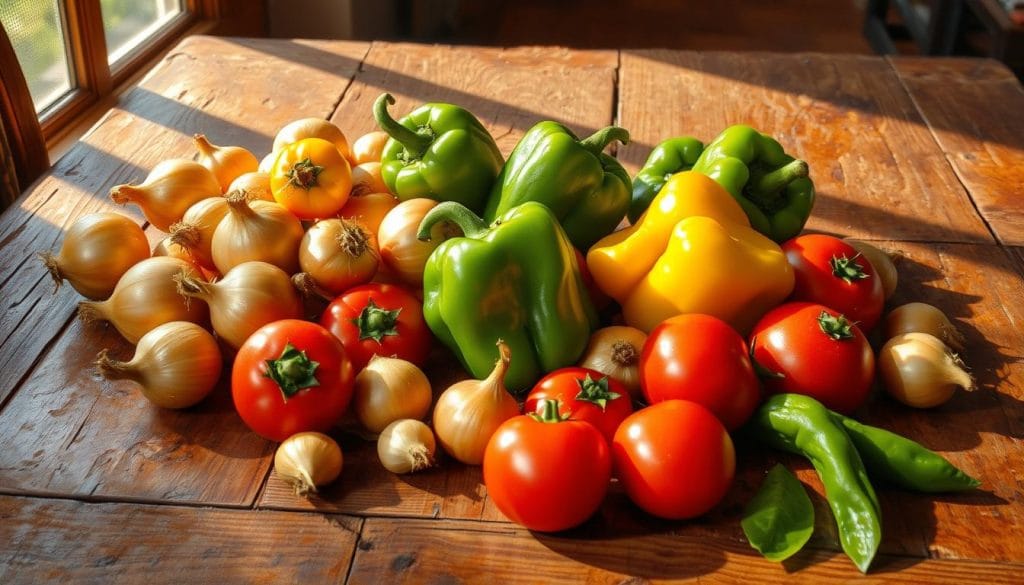
The Holy Trinity is the heart of Cajun cuisine. It’s a mix of three key ingredients that make our jambalaya special:
These vegetables are what make Cajun cooking stand out. Onions add sweetness, celery brings earthy flavours, and bell peppers add a subtle twist.
When chopping the Holy Trinity, precision is important. We chop the vegetables into 1/2-inch pieces for even cooking and flavour. Our method includes:
Garlic is a perfect match for our Holy Trinity. By mincing four medium cloves and adding them at the right time, we get deep, rich flavours. This makes our jambalaya truly special.
The secret to great Cajun cooking lies in understanding how these simple ingredients work together to create something truly magical.
When these vegetables cook in the pan, they release liquid. This liquid deglazes the pan, bringing back all the flavours into our dish. This is what makes our jambalaya different from just any rice dish.
Making a great jambalaya is more than just mixing ingredients. It’s about using special cooking methods to turn simple things into a work of art. The secret is in the techniques that add layers of flavour and texture.
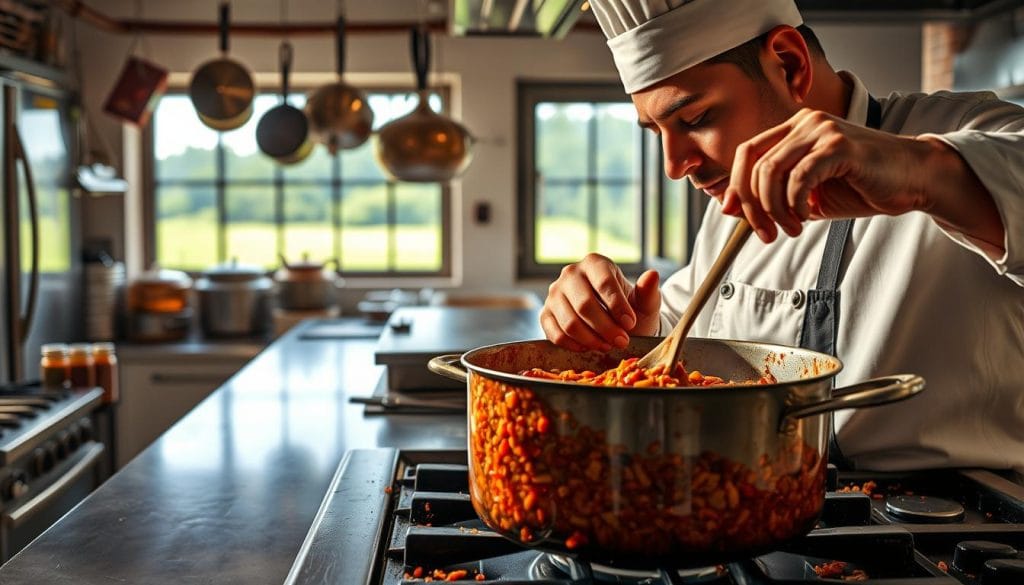
Professional chefs say a top-notch jambalaya starts with precise cooking. The Maillard reaction is key for deep, rich flavours that make this dish stand out.
Our jambalaya celebrates the ease of one-pot cooking. We’ve found a way to keep it simple while making it full of flavour. The main steps are:
Browning meat is vital for adding depth. We brown chicken and sausage carefully to get a golden crust. This ensures each piece is full of flavour. The steps are:
“The magic of jambalaya lies in patience and technique, not just ingredients.”
Our jambalaya is a dance of flavours. We add ingredients one by one, letting each one add its special touch. The Maillard reaction turns simple proteins into a flavourful symphony, making each bite tell a story.
Rice is more than just an ingredient in jambalaya. It’s the dish’s foundation. Choosing the right rice makes a great recipe even better.
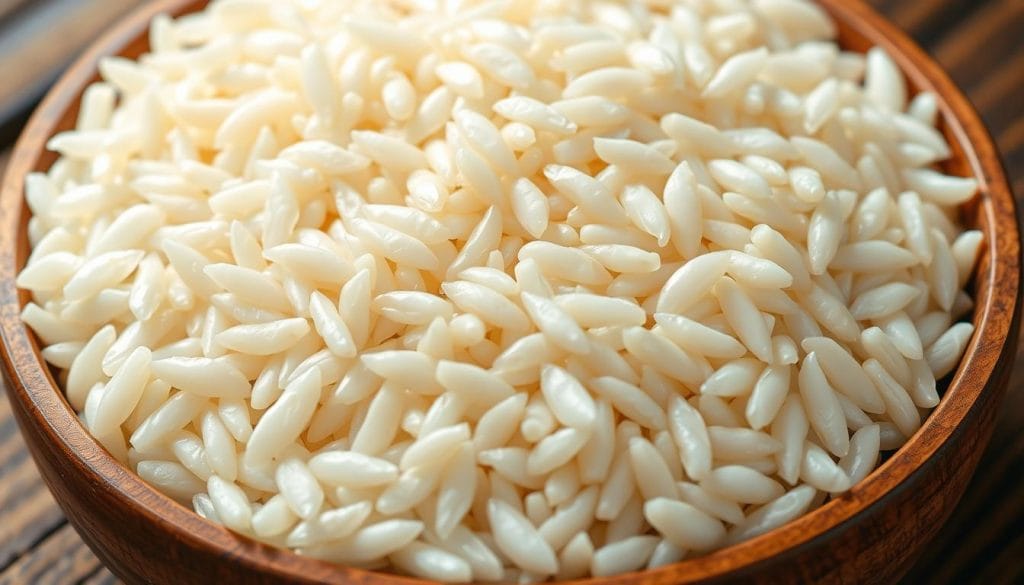
Long-grain rice is key for jambalaya’s perfect texture. We love using:
We steer clear of basmati or jasmine rice. Their unique tastes can mess with the Creole seasonings.
Getting the jambalaya just right needs careful planning. Our tried-and-true method guarantees tasty results:
“The secret to perfect rice is understanding its relationship with liquid.” – Creole Cooking Tradition
We’ve found a game-changing way to cook rice. Oven cooking at 325°F (160°C) for about 40 minutes fixes common stovetop issues.
This method gives us a dish where each grain holds the rich, complex flavours of jambalaya.
Jambalaya is a dish that loves to be changed up. It’s a journey of personal cooking that turns this Louisiana classic into something special. It’s all about making it your own, with your favourite tastes and dietary needs.
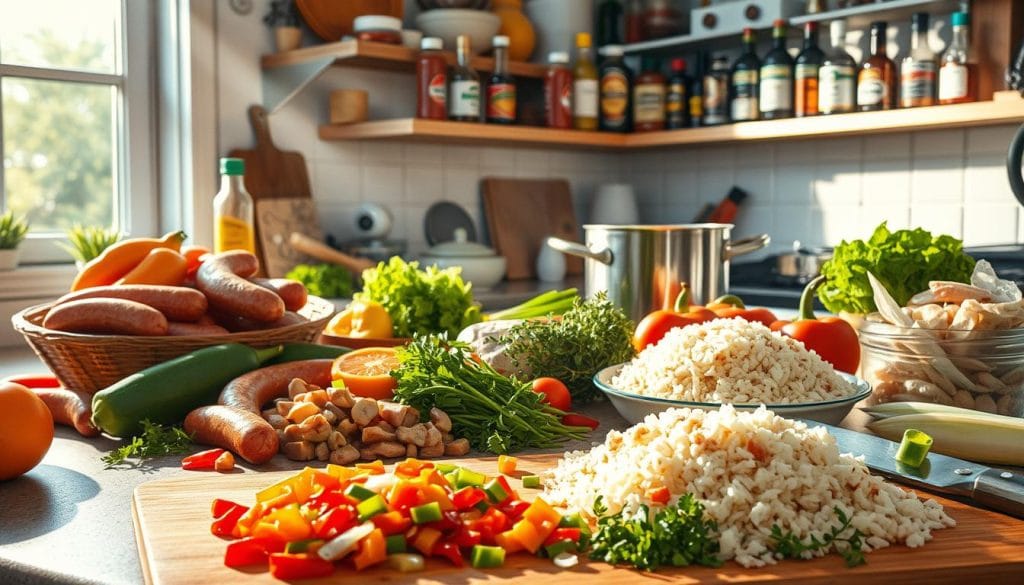
Our jambalaya recipe is perfect for different diets. For a vegetarian twist, try these tasty swaps:
Seafood lovers can mix and match proteins like:
Spice levels can be adjusted to your liking. Here’s how to make it your own:
It’s time to make your own jambalaya. Try new ingredients like a special sausage or a secret spice mix. Remember, cooking is about being creative while keeping traditions alive.
Our jambalaya is at the heart of Creole cuisine, a dish to share and celebrate. It needs careful serving ideas and presentation to honour its rich heritage.
A great jambalaya can be a full meal on its own. But, adding traditional sides makes it even better. Here are some suggestions:
| Beverage Type | Recommended Options |
|---|---|
| Beer | Crisp lagers, wheat beers |
| Wine | Chilled Beaujolais, off-dry Riesling |
| Non-Alcoholic | Sweet tea, fresh lemonade |
Make your meal look stunning by serving jambalaya in a large, colourful bowl. Add fresh scallions and parsley on top. Don’t forget to have hot sauce bottles ready for everyone to add their own heat.
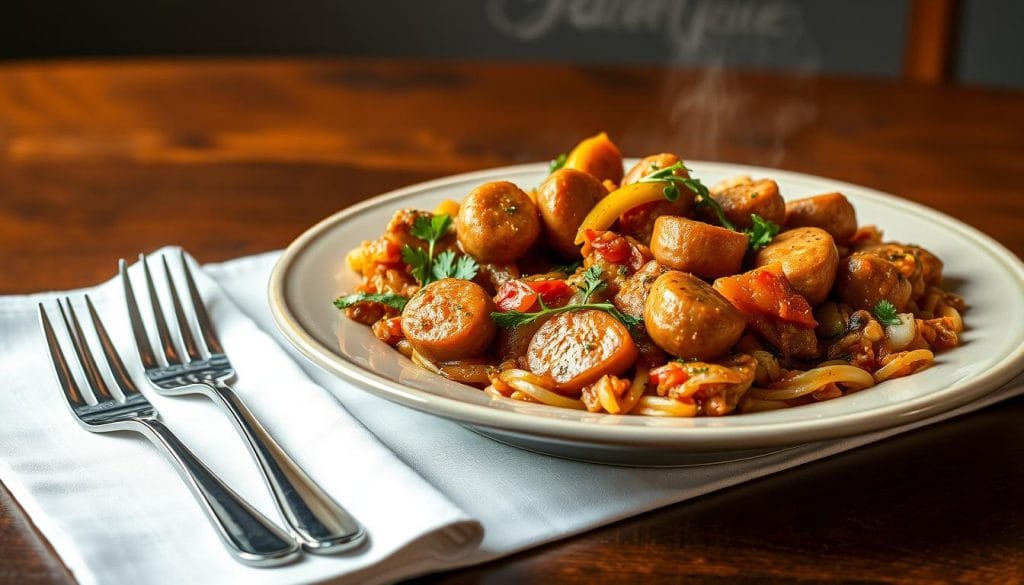
Remember, jambalaya is more than food—it’s a celebration of flavour and community.
Our delicious one-pot meal deserves proper care to keep its amazing flavours. Jambalaya is a versatile dish that can be enjoyed for days. Knowing how to store leftovers is key for home cooks.
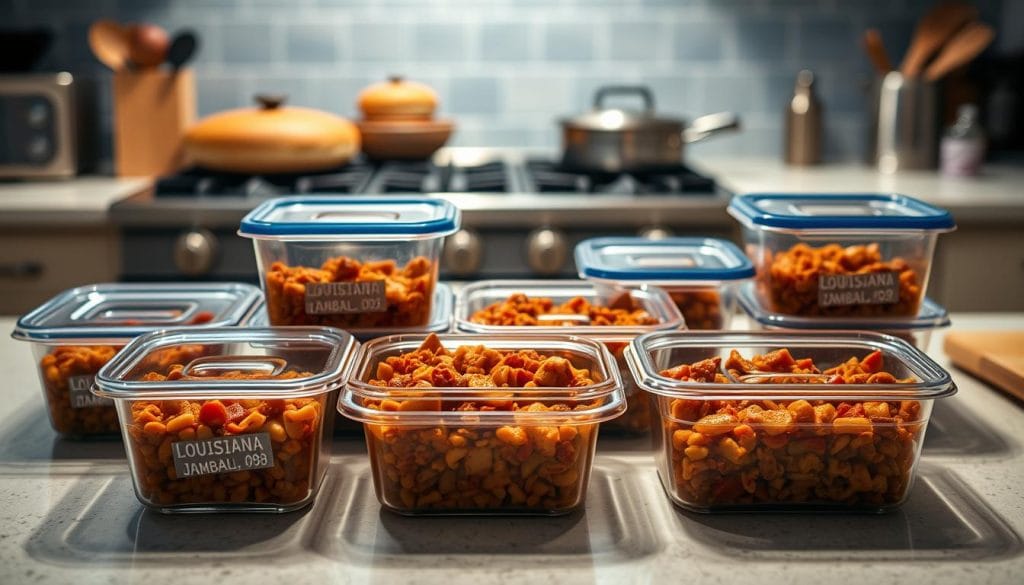
Keeping your jambalaya fresh requires careful storage. Here are some essential tips:
Freezing is great for longer storage. Here are our top tips:
Reheating your jambalaya needs gentle heat and a bit of moisture. Here are three main ways to reheat:
| Method | Technique | Liquid Addition |
|---|---|---|
| Stovetop | Medium-low heat, covered | 2-3 tablespoons stock |
| Microwave | 1-2 minute intervals | 1 tablespoon water |
| Oven | 325°F, covered with foil | 1/4 cup stock |
By using these storage and reheating methods, your jambalaya will stay delicious for days.
Making the perfect jambalaya needs skill and care. Our guide will show you how to avoid common mistakes. This will make your gourmet Jambalaya recipe truly special.
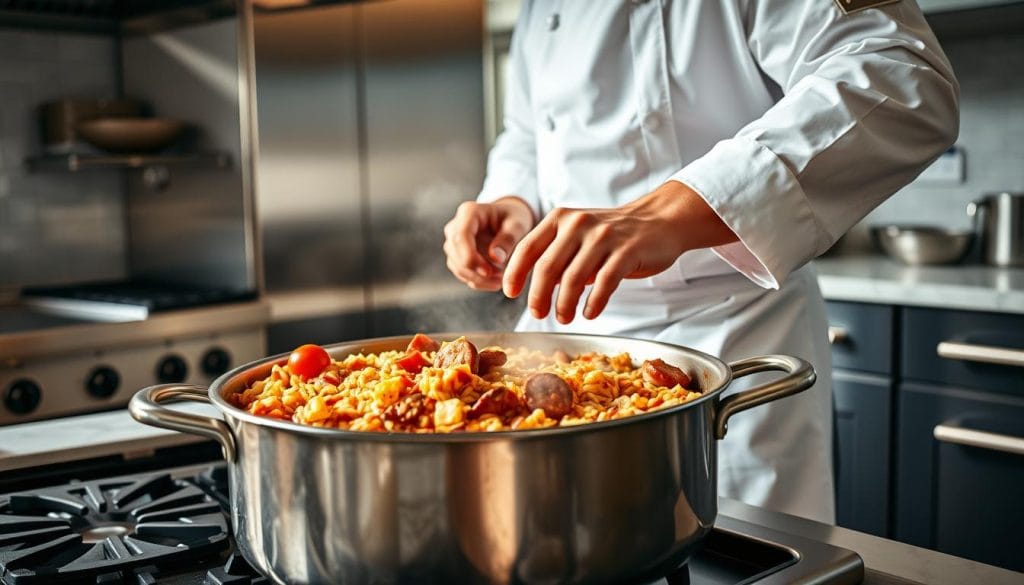
Rice is key in jambalaya. If it’s overcooked, it turns into mush. Look out for these signs:
To avoid this, use gentle heat and don’t stir too much. Cook for 40 minutes and rest for 15. This way, your rice will be just right.
Getting the liquid right is important in jambalaya. Too much makes it too wet. Here’s how to get it right:
Spicing is an art in our gourmet Jambalaya recipe. To avoid too much heat, do this:
A great jambalaya balances flavours well. With these tips, you’ll make perfect jambalaya every time.
Our journey through Louisiana specialities has shown us the beauty of jambalaya. It’s more than just a meal; it’s a cultural treasure. This dish connects people across the world and through time.
Every bite of authentic Creole recipes like jambalaya tells a story. They show us the importance of community and shared moments. From New Orleans to Ireland, this dish brings people together with its lively flavours.
Food has a unique power to bring people together. Our jambalaya recipe helps you create special moments. It turns a simple meal into a celebration of togetherness, whether with family or friends.
We’re committed to keeping traditional cooking alive for today’s cooks. We honour jambalaya’s rich history, making sure each dish respects its roots.
We encourage you to start your own culinary journey with this recipe. Learn the basics, grasp the flavours, and then let your creativity shine. Every great recipe grows through personal touches, and jambalaya is no different.
Jambalaya comes from West African jollof rice. It was shaped by Spanish, French, Caribbean, and Native American cooking styles. It became a unique dish in Louisiana, showing the area’s diverse culture.
Creole jambalaya from New Orleans has tomatoes. Cajun jambalaya, found elsewhere in Louisiana, doesn’t. Both use onions, celery, and green peppers for flavour.
Use long-grain white rice for jambalaya. It cooks up fluffy and separate. Don’t use basmati or jasmine rice, as they might clash with the Creole spices.
Yes! Replace chicken and sausage with smoked tempeh, seitan, or veg sausages. Add mushrooms and courgettes for extra flavour. Use veg stock for depth.
Traditional jambalaya has a nice warmth but isn’t too hot. You can tweak the spice by adjusting cayenne, hot sauce, and chillies to your liking.
Store jambalaya in an airtight container in the fridge for 3-4 days. Freeze it for up to 3 months. Cool it down to room temperature before refrigerating or freezing.
Reheat jambalaya on the stovetop. Add a bit of chicken stock or water, cover, and heat on medium-low. Or, microwave it with a damp paper towel, stirring often.
Beer lovers might enjoy crisp lagers, wheat beers, or amber ales. For wine, try chilled light reds like Beaujolais or aromatic whites like Riesling. Sweet tea and lemonade are great non-alcoholic options. For those who prefer cocktails, a refreshing gin and tonic or a classic mojito can be perfect choices for warm weather. Additionally, if you’re looking to switch your online domains or website without losing traffic, the home redirect process explained can help ensure a seamless transition. Pair any of these beverages with good company, and you have the perfect formula for a delightful gathering.
 CART
0
CART
0
Leave a Reply